
Humanoid robots to get life-cycle tracing ID numbers
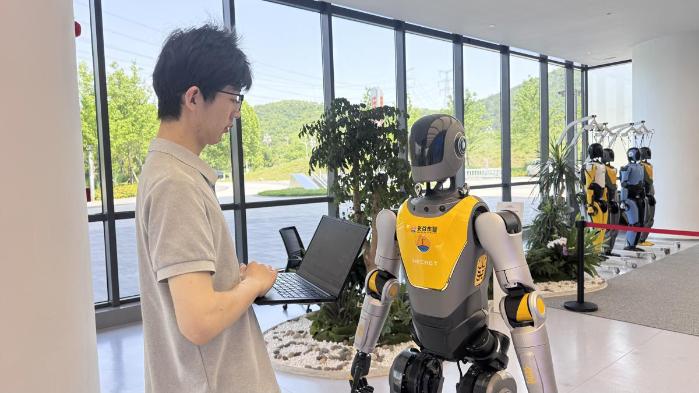
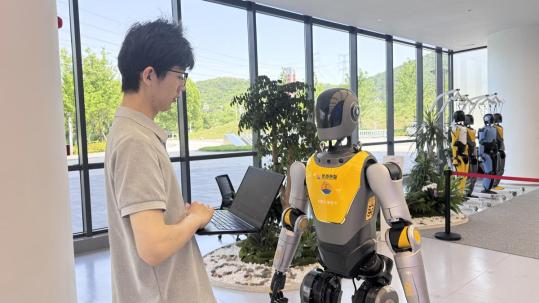
Chinese carnal women.A worker debugs a humanoid robot at the Hubei Humanoid Robot Innovation Center in Wuhan, Hubei province. [Photo provided to chinadaily.com.cn]
Some humanoid robots in Hubei province are set to become the first in China to receive their own identity card numbers, allowing their full life-cycle activities to be recorded, in a move aimed at ensuring full traceability and clear accountability amid the rapid development of the industry, experts said.
The number, comprised of 29 numerals and English letters, identifies a robot's brand nationality, company, product model and serial number, covering key information such as the manufacturer, hardware parameters, intelligence level and factory filing records.
Like Chinese citizens' ID card numbers, each robot's number is unique, though it contains 11 additional characters.
Beyond basic static data, the digital ID card enables full life-cycle tracking of information including equipment maintenance records and application scenarios. Real-time data such as joint wear and tear, battery status and operational accuracy can also be accessed at any time through a management platform, said Liu Chuanhou, chief operating officer of the Hubei Humanoid Robot Innovation Center in Wuhan, which is leading the project.
"If the robot breaks down, we can check its operational logs and maintenance records through its unique ID to locate the malfunction, determine liability and carry out efficient maintenance," he said.
A new user can also verify the robot's performance and service records through its ID without repeated testing, which is expected to improve the efficiency of robot reuse, Liu added.
As of Monday, the center had completed filing applications and coding tests for the first batch of enterprises and products with the Ministry of Industry and Information Technology. Official numbering will begin after relevant national standards are released.
The enterprises include leading companies across Hubei's humanoid robot industrial chain, such as Optics Valley Dongzhi, Glroad, Hubei Qirobotics, Jingchu Humanoid Robot, HandX, Guanggu Haribit and Maxnova.
Liu Jieni, business director at Maxnova, said several of the company's flagship humanoid robots had completed unified coding and filing. The robots are mainly used in industrial manufacturing, commercial services and demonstration training.
She said the company joined the initiative to align with the industry's standardization trend, highlighting the smooth process involved.
"Taking part in this initiative not only helps us address compliance gaps and reduce operation and maintenance costs, but also promotes the large-scale market expansion of our products," she said. "Meanwhile, it enables us to accumulate valuable data assets and further strengthens our core competitiveness and brand influence in the industry."
Global shipments of humanoid robots reached about 17,000 units in 2025, with a market size of 2.88 billion yuan ($424 million). Benefiting from advantages in supply chains, technologies and application scenarios, China ranks first globally in the humanoid robot industry, according to a report released in March by Beijing CCID Publishing and Media and China Electronics News.
China has more than 140 humanoid robot manufacturers, with shipments totaling 14,400 units, accounting for 84.7 percent of the global total. Its market size reached 1.55 billion yuan, representing 53.8 percent of the global market, the report said.
Amid the rapid development of China's humanoid robot industry, many enterprises still operate in isolation with incompatible technical standards. There is also a lack of unified norms for product traceability, safety supervision and data circulation, according to Liu.
He said the initiative is expected to promote standardization and strengthen the institutional foundation for the large-scale, high-quality development of humanoid robots.
At the same time, as high-end intelligent equipment becomes increasingly integrated into production and daily life, humanoid robots also pose potential risks related to operational safety, data security and ethical compliance.
"In cases involving safety incidents or potential data hazards, the ID number can support rapid traceability and liability confirmation, helping prevent risks such as technology abuse and information leakage," Liu said.