

China will continue to develop nuclear power, the safety of which can be ensured, a senior energy policymaker said on Thursday.
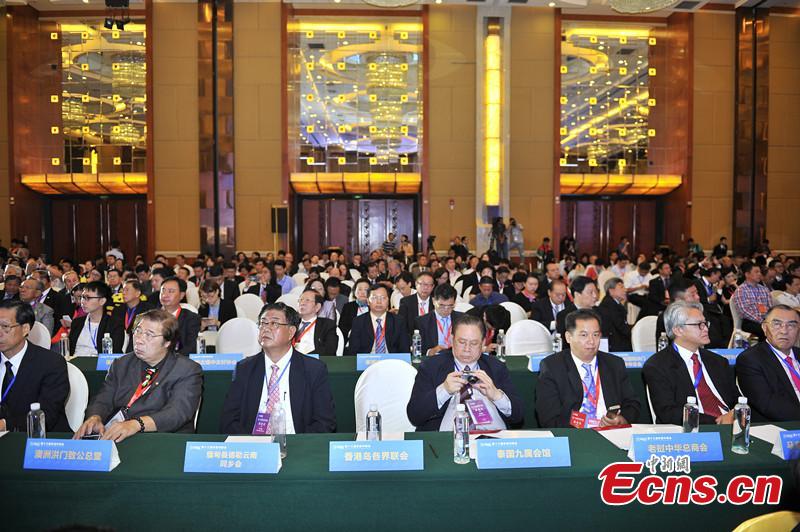
"No matter what circumstances, it is inevitable to include nuclear power as a significant component of China's effort to resolve energy problems," Zhang Guobao, advisory board chairman of the National Energy Administration (NEA), said at the International Capital Conference.
Zhang's remarks came at a time when uncertainties loom over China's nuclear future. Beijing suspended approvals for new plants and announced a sweeping review of nuclear safety and atomic energy laws and regulations less than a week after Japan's Fukushima disaster in March.
China has 14 existing reactors, while Japan has 54 and the Republic of Korea has 21.
Twenty-seven reactors are under construction in China today, more than 40 percent of the global total, according to data from the World Nuclear Association.
By the end of 2010, China's installed nuclear power capacity had reached 10.82 million kilowatts, with another 30.97 million kilowatts under construction, according to a white paper published this week.
But China still relies heavily on coal, consuming 3.2 billion tons, or 46 percent of the world's total, in 2010.
Zhang, a former head of the NEA, said China cannot rely on coal to further develop its economy and improve people's lives.
He added that the safety of nuclear plants could be ensured, according to existing technology, even if "the Japan earthquake and tsunami happened again".
"China needs to diversify its energy mix, increasing the amount of nuclear (energy) in the variety of options to meet future electricity demand," said Didier Houssin, director of Energy Markets and Security at the International Energy Agency, on the sidelines of the conference.